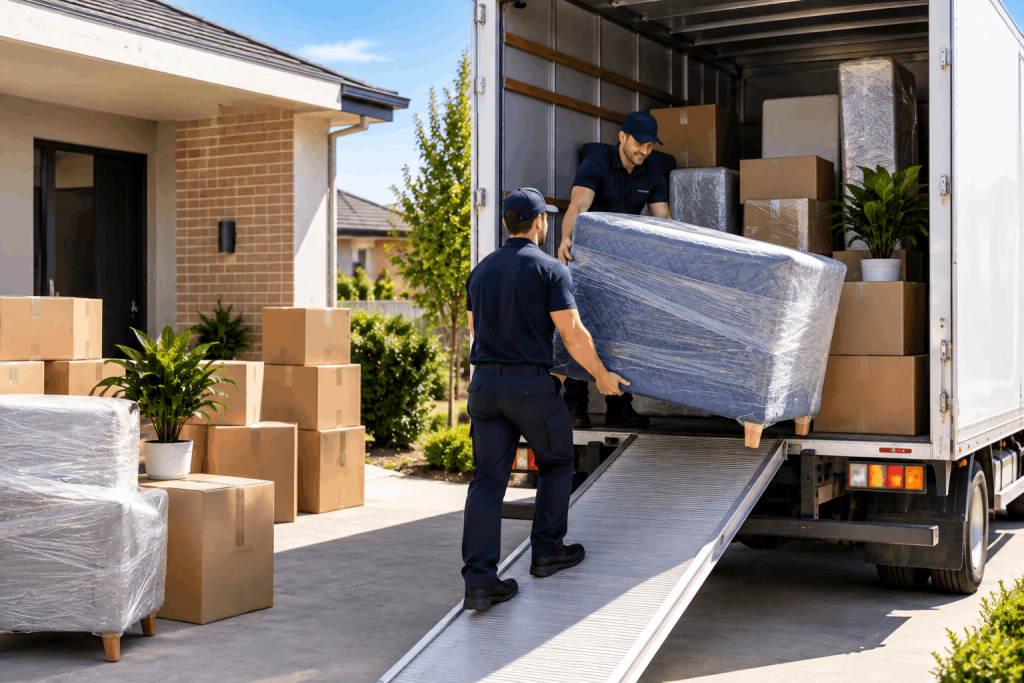
Moving an office means much more than desks and boxes. Staff need to know what is happening, important equipment needs to be treated with care and the business still needs to function while the workplace is changing.
In the absence of a clear plan, common problems include:
Workers packing at different times.
Furniture arriving before the rooms are ready.
Important equipment is becoming hard to identify.
Jobs to do before moving.
For businesses looking for commercial moving services in Melbourne, ProMove Transport offers years of practical moving experience in furniture, packing, transport and specialised relocation requirements. Keep reading, as these tips focus on the decisions that can make an office move more controlled and less disruptive.
Focus: Reducing disruption during an office move through early decisions, staff preparation and careful sequencing of moves.
Key considerations: Office inventory, employee responsibilities, furniture preparation, equipment handling and business continuity.
Moving Approach:Business Removalists manage the physical move, in the meantime the business focuses on staff, technology and operational priorities.
Professional Insight: ProMove Transport uses practical moving experience on furniture, packing and specialised items.
Outcome: A smoother move with fewer avoidable interruptions before, during and after the move.
1. What Should You Decide Before Planning the Physical Move?
Start by deciding what is actually moving. An office relocation is a useful opportunity to separate essential assets from items that are obsolete, duplicated or no longer required.
Create categories as show as follows:
Category
Action
Moving
Include in the relocation plan
Replacing
Arrange the replacement separately
Removing
Dispose of, donate or recycle appropriately
Storing
Keep aside for future requirements
This decision should happen before packing begins. Otherwise, employees may spend time preparing items that will never enter the new office.
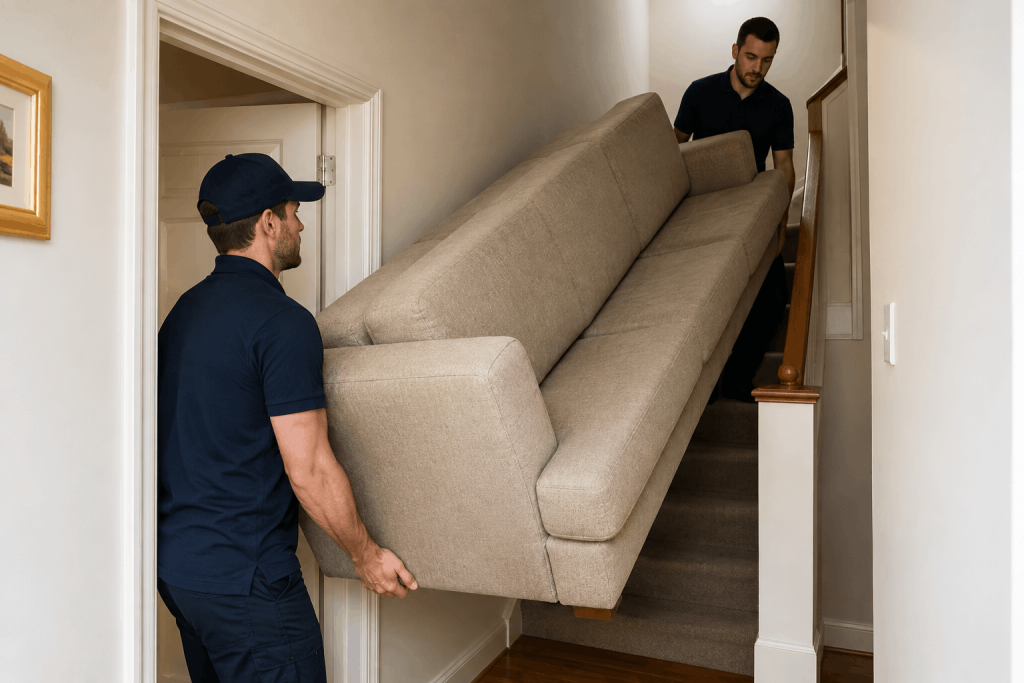
Check larger furniture first, especially desks, cabinets, meeting tables and storage units. Their size can affect the practical route into the new premises.
Practical takeaway: Reduce the volume before you organise the move. It gives the relocation team a clearer list of what needs to be handled.
2. How Can You Prepare Staff Without Disrupting Their Work?
Instead of asking employees to “get ready for the move,” give them specific jobs to do. Depending on their equipment and records, different teams may require different instructions. For instance:
Staff may remove personal items from desks.
Department heads can determine essential files and equipment.
IT staff can control computers and network equipment.
Set a packing deadline before your moving day.
Managers can instantly assess teams’ needs after the move.
This gives the moving team a prepared workplace rather than an office that is still being packed when loading starts.
Use clearly identified boxes for personal and departmental belongings. Confidential records should remain under the business’s normal privacy controls.
Practical takeaway: Staff should know what they are responsible for, what they should leave alone and when their preparation must be finished.
3. How Do You Make Large Office Furniture Easier to Move?
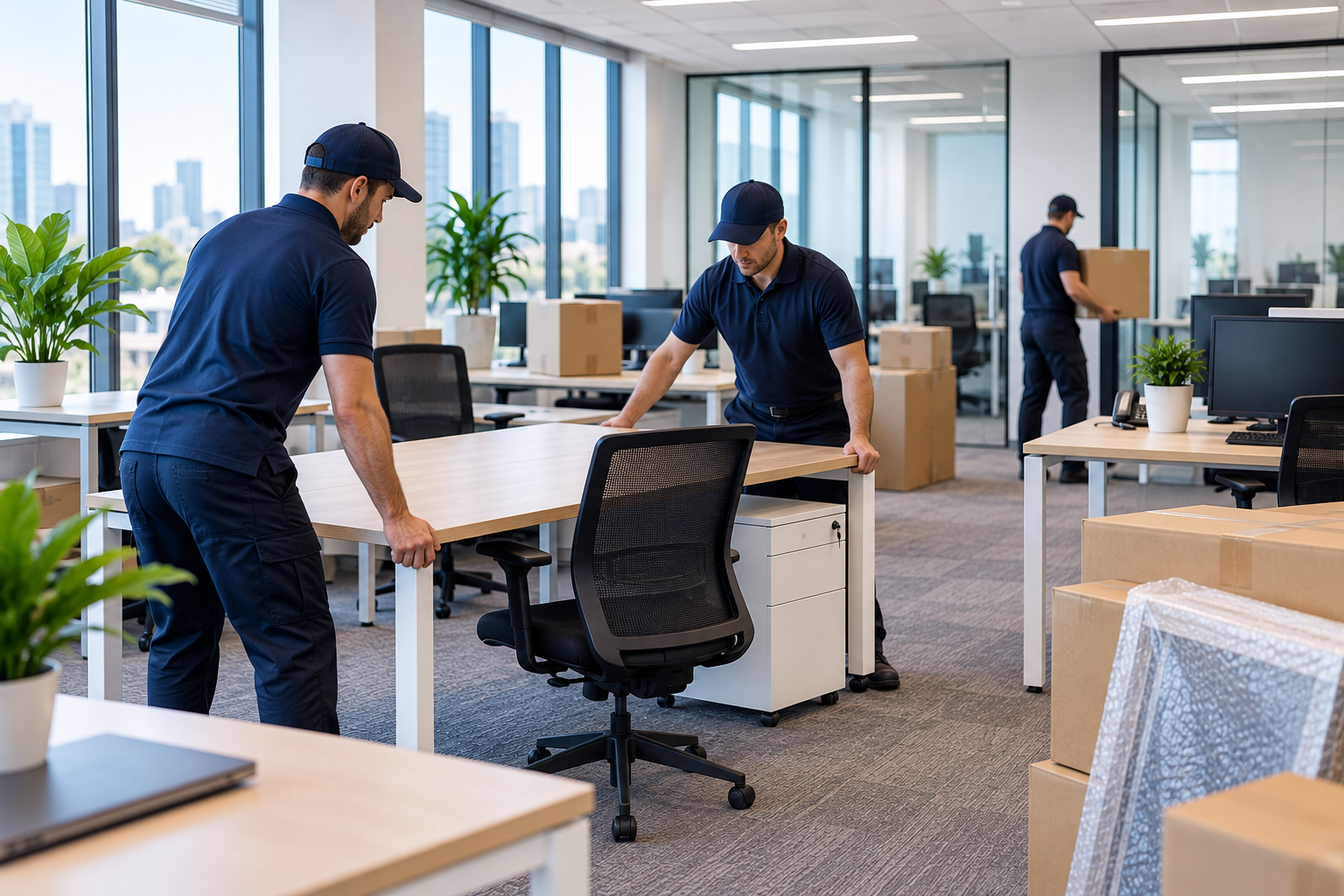
Prepare large furniture corresponding to its construction and the path it needs to take. Some parts must be taken apart, some can be moved as they are.
Common candidates for disassembly include:
Large desks.
Bed style staff furniture where applicable.
Modular workstations.
Meeting tables.
Cabinets with removable sections.
Keep screws and fittings together in labelled bags. Photograph complicated assemblies before taking them apart.
Heavy pieces require appropriate handling equipment. The decision to deconstruct should consider the construction of the furniture, its weight and the route of access. Taking everything apart can lead to unnecessary re-assembly.
Practical takeaway: Dismantle when it really works on handling. Do not take apart furniture simply because it is large.
4. How Should Sensitive Office Equipment Be Handled?
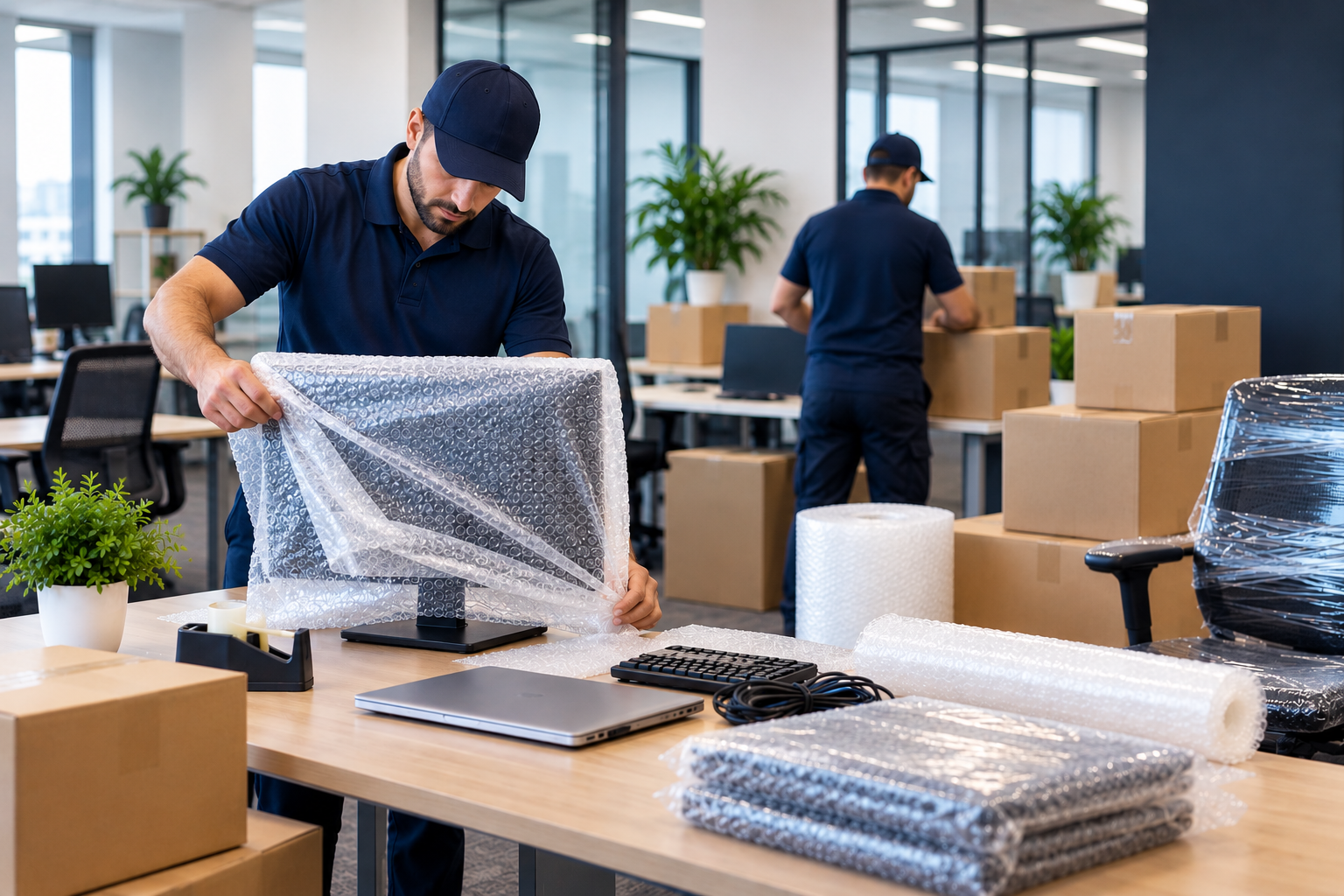
Prior to the loading, the crew must identify sensitive equipment. Computers, monitors, printers, specialist equipment and fragile items may need a different level of protection to standard office furniture.
For technology, coordinate physical movement with a person who disconnects and reconnects. Store cables and accessories with the adjunct equipment and do not place loose parts into general boxes.
For fragile or valuables:
Find them before move-in day.
Use appropriate protective materials.
Keep related components together.
Inform the moving team of any special handling requirements.
Confirm where each item needs to be placed.
Practical takeaway: Tell your moving team about unusual items before the move. Last minute information can change the handling approach.
5. What Is the Best Way to Sequence the Move?
Move in an order that supports the business rather than simply emptying one room after another.
A useful sequence is:
First: Non essential records, surplus furniture and rarely used items.
Next: General office furniture and departmental belongings.
Later: Standard work stations and equipment.
Last: Items employees must have immediately when operations resume.
This helps to segregate low priority relocation work from business critical equipment. If the move is a staged one, keep a written record of what has already been moved. It stops teams looking for items still at the old premises. Practical takeaway: The sequence of the move should align with business priorities, not just the office’s physical layout.
6. What Should You Check About the Building Before Moving Day?
Building rules can affect when and how relocation happens. Check these requirements and confirm the final moving schedule with the building manager. Ask about:
Lifts bookings.
Loading zones.
Access for vehicles.
Allowed moving times.
Security protocols.
Protect the floor.
Big stuff is restricted.
For multi level offices consider stairs and alternative access. Bulky or awkward furniture may require extra handling equipment or a different route. Practical takeaway: A building inspection should answer one question: can every planned item physically get from the vehicle to its intended room?
7. How Can You Keep the Business Running After the Move?
Plan the first working day separately from moving day. A new office can be physically complete while still being operationally unready.
Prioritise:
Essential workstations.
Internet and communications.
Computers and screens.
Shared printers and equipment.
Meeting spaces required immediately.
Remaining storage and non essential items.
Keep an issue list for anything that arrives damaged, is missing or needs repositioning. Deal with urgent problems first rather than trying to finish every unpacking task simultaneously.
If your business has customers visiting the premises, update addresses, signage and visitor information before reopening.
A removalist company can handle the physical relocation while your internal team concentrates on operational tasks that only the business can complete.
Practical takeaway: Your first day should be planned around what employees need to work, not around whether every carton has been unpacked.
A successful office relocation comes from making the right decisions before the truck arrives. Decide what deserves a place in the new workplace, give staff clear responsibilities, prepare furniture according to its construction, separate sensitive equipment from general items and plan the first working day around essential operations.
ProMove Transport brings years of practical experience to commercial moving services across Melbourne, with support for office furniture, packing, transport and specialised moving requirements.
If your business is preparing for a workplace relocation, contact ProMove Transport to discuss the furniture, equipment, access conditions and timing involved.
FAQs
Should an office move be completed in one day?
Not always. The right timeframe depends on the size of the office, the number of items, access to the building and whether the relocation can be staged. A phased move can be useful for companies that need to keep certain departments running while other areas are relocated.
How should office records be handled during relocation?
Identify records in accordance with current organisation retention and privacy practices. Identify confidential material and limit access during packing and transport. Don’t mix sensitive records with general office items that could make accountability difficult.
What happens to furniture that cannot fit through the new office entrance?
Do not wait until moving day to make that decision. Measure the furniture and access points beforehand. Depending on the item, options may include partial disassembly, an alternative internal route or another suitable access method.
Moving house rarely happens in one clean step. Your lease may end before settlement, your new property may need work, or you may need somewhere to keep furniture while moving between homes.
That can create a difficult gap:
You need to leave your current property.
Your next home may not be ready.
Your belongings still need to be protected.
Multiple moves can quickly add extra handling and transport costs.
ProMove Transport experience moving and relocating and also provides pre-packing service options for Melbourne relocations. This guide explains how to use storage as part of a staged move, from deciding what goes into storage to planning the final delivery.
Focus: Planning a staged house move when your new property is not ready immediately.
Key Considerations: Property settlement dates, lease deadlines, renovations, storage periods and the order in which belongings are needed.
Moving Approach: Separate essential items from belongings going into storage, then plan collection and final delivery around fixed dates.
Professional Insight: ProMove Transport recommends planning the retrieval stage before the initial collection, so stored items remain organised and easier to access.
Outcome: A more organised relocation with fewer unnecessary handling steps and a clearer path from your current home to the new property.
What Is a Storage-Based Relocation?
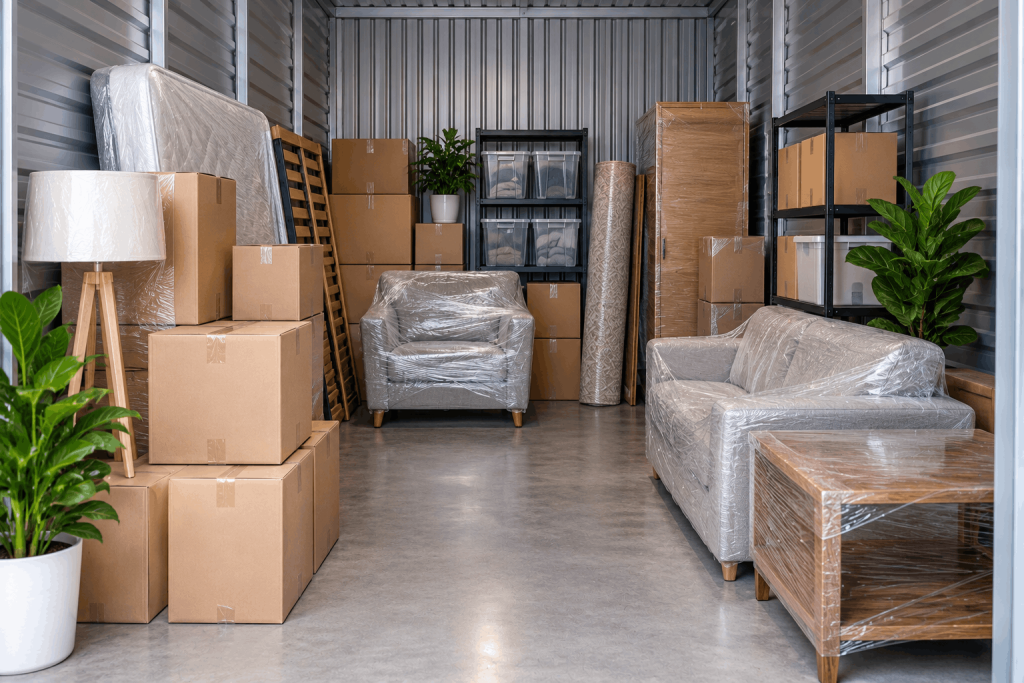
Relocation by storage breaks your move into planned stages, with your belongings held in temporary storage between collection and final delivery.
Stage 1: Sort Before Packing
First separate belongings into three categories:
Move now: Items you’ll need right away at your temporary or new home.
Shop: Furniture, seasonal and household items that you will need later.
Remove or donate: Things that are no longer of practical use.
This first decision can reduce unnecessary handling. Every item that moves between properties more than once creates additional loading, transport and unloading work.
Stage 2: Pack According to the Final Destination
Label boxes according to where they will eventually go. For example, use labels such as “main bedroom”, “garage” or “kitchen”.
For stored furniture, keep hardware with the item it belongs to. A labelled bag secured to a dismantled bed frame is much easier to identify months later than a loose collection of screws in a general box.
Stage 3: Plan the Release From Storage
Decide roughly when each group of belongings will leave storage. This matters when your new property becomes available in stages.
What most experts miss is that storage planning should consider the second move before the first move begins. If you place frequently needed items behind heavy furniture, retrieving them later can mean unnecessary unloading and handling.
Storage works best when you treat your belongings according to how soon you will need them.
Seasonal items: Christmas decorations, outdoor furniture and sporting equipment can usually be stored early.
Occasional-use furniture: Spare beds, side tables and decorative pieces can leave the home before everyday essentials.
Bulky furniture: Large items can be stored when temporary accommodation has limited space.
Business or work equipment: Items that are currently unused can be separated from equipment needed every day.
Essential belongings: Keep documents, medications, daily clothing and frequently used kitchenware readily available.
A useful rule is simple: pack by retrieval priority. That approach can make a major difference when your move takes place over several weeks.
How Should You Organise a Staged Move?
Moving Stage
What to Do
Practical Priority
2 to 4 weeks before
Declutter and organise storage supplies.
Reduce excess volume before moving day.
Before leaving
Pack daily essentials separately.
Keep frequently used items within easy reach.
Collection day
Clearly separate stored items from direct-delivery items.
Prevent loading and delivery confusion.
During storage
Keep an inventory of stored belongings.
Make items easier to locate and retrieve later.
New property ready
Check access and delivery requirements.
Confirm doors, lifts, parking and loading access.
Final delivery
Retrieve priority items first.
Set up essential rooms quickly.
What Should You Tell Your Removalist Before Collection?
Give the removal and moving team as much information as possible before moving day. This allows them to plan labour, vehicle space and handling requirements.
1. Property Access
Tell the team about:
Narrow driveways.
Apartment lifts.
Restricted parking.
Loading zones.
Long walking distances from the vehicle to the property.
2. Storage Requirements
Explain which belongings are going into storage and which are going directly to the new property.
If you are using pre-packing removalists in Melbourne, ask the team to maintain a clear labelling system throughout packing. Consistent labels help distinguish stored items from belongings heading directly to your temporary address.
3. Special Items
Mention heavy, fragile or unusually shaped items before the move. A piano, pool table, antique cabinet or large modular sofa may require different handling arrangements from experienced furniture moving services.
This is where experience matters. What most experts miss is that access conditions can affect the order of loading. A large item may need to be loaded first or last depending on how it will be retrieved later.
When Does a Staged Move Make Financial Sense?
A staged relocation can be useful when moving everything directly into the new property would create additional problems.
Consider storage when:
Your settlement dates do not align.
Your new property is undergoing renovations.
You are temporarily renting.
You are downsizing and need time to sort belongings.
You are relocating interstate or overseas.
Your business premises are changing in phases.
Storage does add another stage to the relocation, so compare the cost against alternatives such as extending a lease, renting a larger temporary property or making several separate trips.
For some households, combining transport and storage through one provider can simplify scheduling. ProMove Transport can coordinate removal and storage requirements as part of the wider relocation process.
How Can You Make the Final Move Out of Storage Easier?
The final delivery should be planned well before you need the belongings.
Create a simple retrieval list:
Priority 1: Beds, essential kitchen items and everyday furniture.
Priority 2: Remaining household furniture and appliances.
Priority 3: Seasonal, decorative and occasional-use belongings. Keep in mind your access arrangements for the new property. Pre-book the building’s lifts or loading areas, if they have a booking system, before the delivery date.
For larger house moves, professional furniture removalists can also assist in working out the practical loading and unloading sequence based on access and size of items.
Keep Your Relocation Organised From Start To Finish
A staged relocation works best when storage becomes part of the moving plan from the beginning. Decide what you need immediately, what can wait, and when each group of belongings will be delivered.
ProMove Transport can help coordinate a moving and pre-packing service around your relocation requirements, including storage between stages. If your move involves temporary accommodation, renovations, delayed settlement or a phased relocation, contact the team to discuss your requirements.
FAQs
How long should I keep belongings in storage between two moves?
There is no fixed rule. It depends on your property timeline, renovation schedule or temporary accommodation. Just make sure you confirm the retrieval date early so transport and access can be arranged without any last-minute hassle.
How long should I keep belongings in storage between two moves?
It is contingent upon what it is and how it was kept. Special preparation and handling may be required for valuable furniture, antiques, pianos or pool tables. Discuss these items with the removalist prior to collection, rather than treating them as standard boxes.
What if I need some stored items before the final move?
Tell your storage provider or removalist which items you may need to retrieve early. Keeping an inventory and clear labels makes partial retrieval easier and reduces unnecessary handling.
Moving heavy antique furniture takes more planning than a standard household move. Older wardrobes, cabinets, dining tables and other valuable pieces can be heavy, fragile and difficult to manoeuvre through Melbourne homes.
A rushed move can lead to scratches, dents or broken fittings, damage to floors, walls, door frames or staircases, cracks caused by poor lifting or uneven weight distribution, and loss of original hardware or delicate decorative details.
ProMove Transport handles specialised relocation work where furniture condition, access and safe handling all matter. Its experience across Melbourne provides useful context for choosing suitable art & antiques shipping services and preparing valuable pieces for transport.
Moving antique furniture is not just a matter of strength required. You have to look at each piece, protect surfaces, plan your route and use the correct equipment. Some antiques require special attention, as the standard moving process involves unnecessary risks. Before any move begins, ProMove Transport will inspect the furniture, access points, and protective materials.
Should Antique Furniture Be Inspected Before Moving?
Inspect the furniture before lifting or wrapping it because age can affect joints, veneers, finishes and internal supports.Check for:
What To Check
Why It Matters
Loose joints
Lifting can worsen existing movement.
Cracks or splits
Pressure may cause further structural damage.
Veneer or inlay
Loose sections can catch during wrapping.
Drawers and doors
They can open during handling and shift the centre of weight.
Existing damage
Photos provide a clear record before transport.
Here is something most people miss. The weakest point of an antique is not always visible from the outside. A cabinet might look solid while its aged joints have limited strength. Test movement carefully before deciding how the item should be lifted.Photograph valuable surfaces, fittings and existing marks before the move. Keep removable handles, keys and small hardware together in labelled packaging.
What Is the Safest Way To Protect Antique Furniture?
Good protection combines padding, surface protection and careful handling. Wrapping alone will not stop an antique from getting damaged inside a vehicle.
Use:
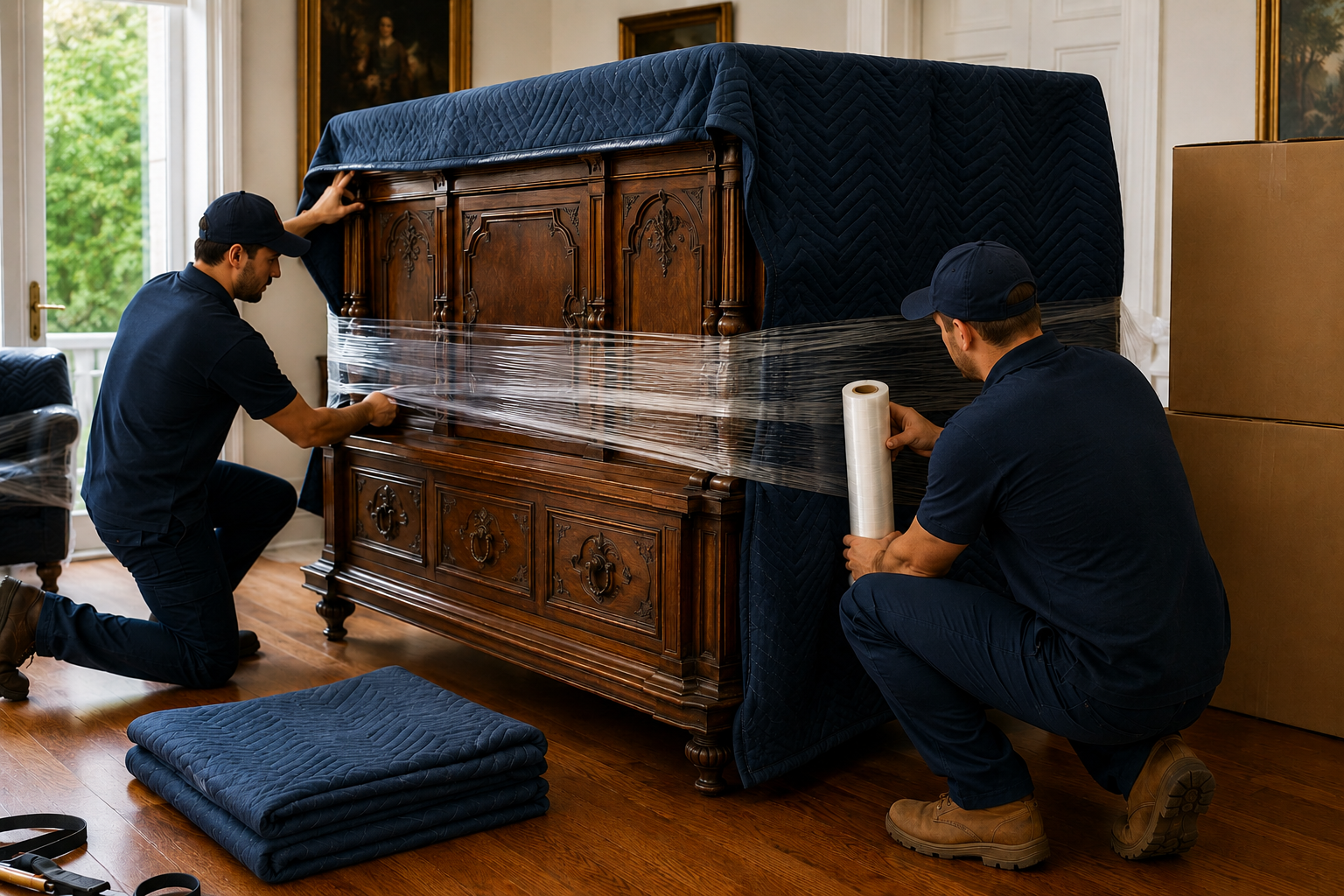
Clean moving blankets for finished surfaces.
Corner protection around vulnerable edges.
Suitable wrapping for decorative or polished sections.
Floor protection along the planned route.
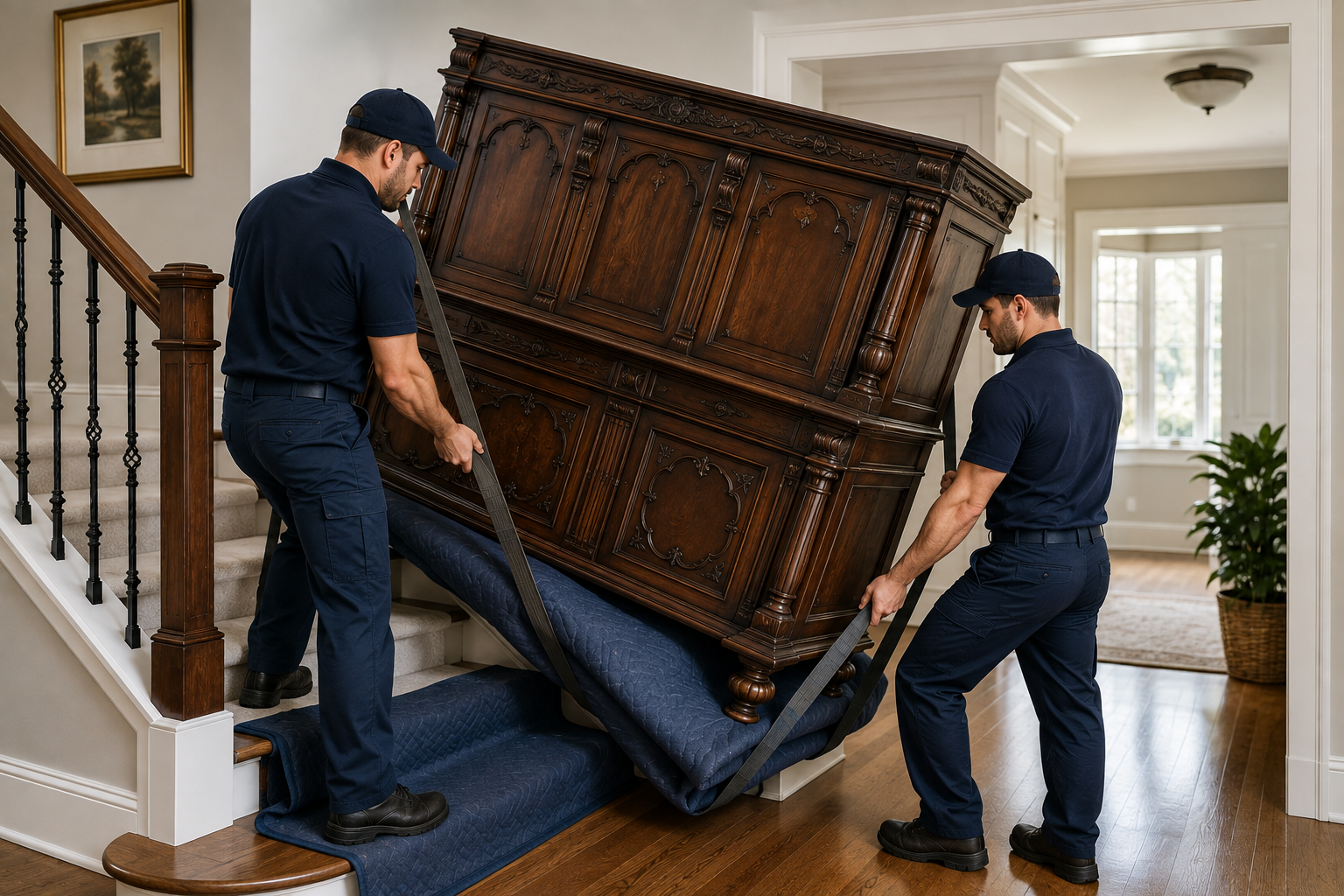
Straps and lifting equipment appropriate for the item’s weight.
Do not put adhesive tape directly on polished wood, aged finishes or veneer. Tape can leave residue or damage the surface when removed.
For delicate pieces, the packaging method should match the furniture’s construction and finish. Do not use the same materials for everything.
When Should Heavy Antique Furniture Be Disassembled?
Only disassemble an antique when it actually reduces risk and the construction allows it safely. Removing detachable legs, shelves or sections can reduce overall weight and make tight access easier.
But older furniture may use traditional joints, aged screws or fittings that should not be forced.
Before disassembly:
Photograph how components fit together.
Label hardware and fittings.
Keep small parts in sealed, labelled bags.
Record fragile components separately.
Check whether the piece has previously been repaired.
What most experts miss: Disassembly can sometimes create more risk than moving the furniture intact. If a joint has weakened with age, forcing it apart may cause permanent damage. The decision should depend on construction, condition and access, not weight alone.
How Should You Plan Doorways, Hallways And Stairs?
Measure the complete route before moving the furniture. The furniture’s dimensions alone do not tell you whether it can pass safely through a property.
Measure:
Furniture height, width and depth.
Door opening width and height.
Hallway width.
Staircase width and turning points.
Ceiling height around landings.
Lift dimensions where applicable.
Make sure you clear a path before you move, and keep any fragile walls and floors safe.
This is where experienced furniture removalists can be of practical value. A team can judge turning points and carrying positions before the item is lifted, cutting down on last-minute manoeuvring.
Do You Need To Hire Professionals For Antique Heavy Furniture?
For large, fragile, or expensive antiques, professional handling is usually the safer bet. The decision should take into account the weight, condition and value of the item, and any access restrictions and available equipment.
Situation
Practical Approach
Small, stable antique with easy access
You may be able to handle it gently yourself.
Heavy solid-wood cabinet
Professional help is the safer choice.
Rare or highly valuable antique
Professional handling is recommended.
Narrow or difficult-to-access stairs
A professional assessment is recommended.
Several heavy items
A planned moving team can reduce manual handling strain.
If you need a removal company in Melbourne, ask what equipment, protection methods and insurance arrangements apply to valuable furniture before booking.
What Equipment Helps Prevent Damage During The Move?
The right equipment reduces uncontrolled lifting and helps distribute weight during handling.
Common equipment includes:
Furniture dollies.
Lifting straps.
Protective moving blankets.
Floor runners and protective sheets.
Corner guards.
Ramps where appropriate.
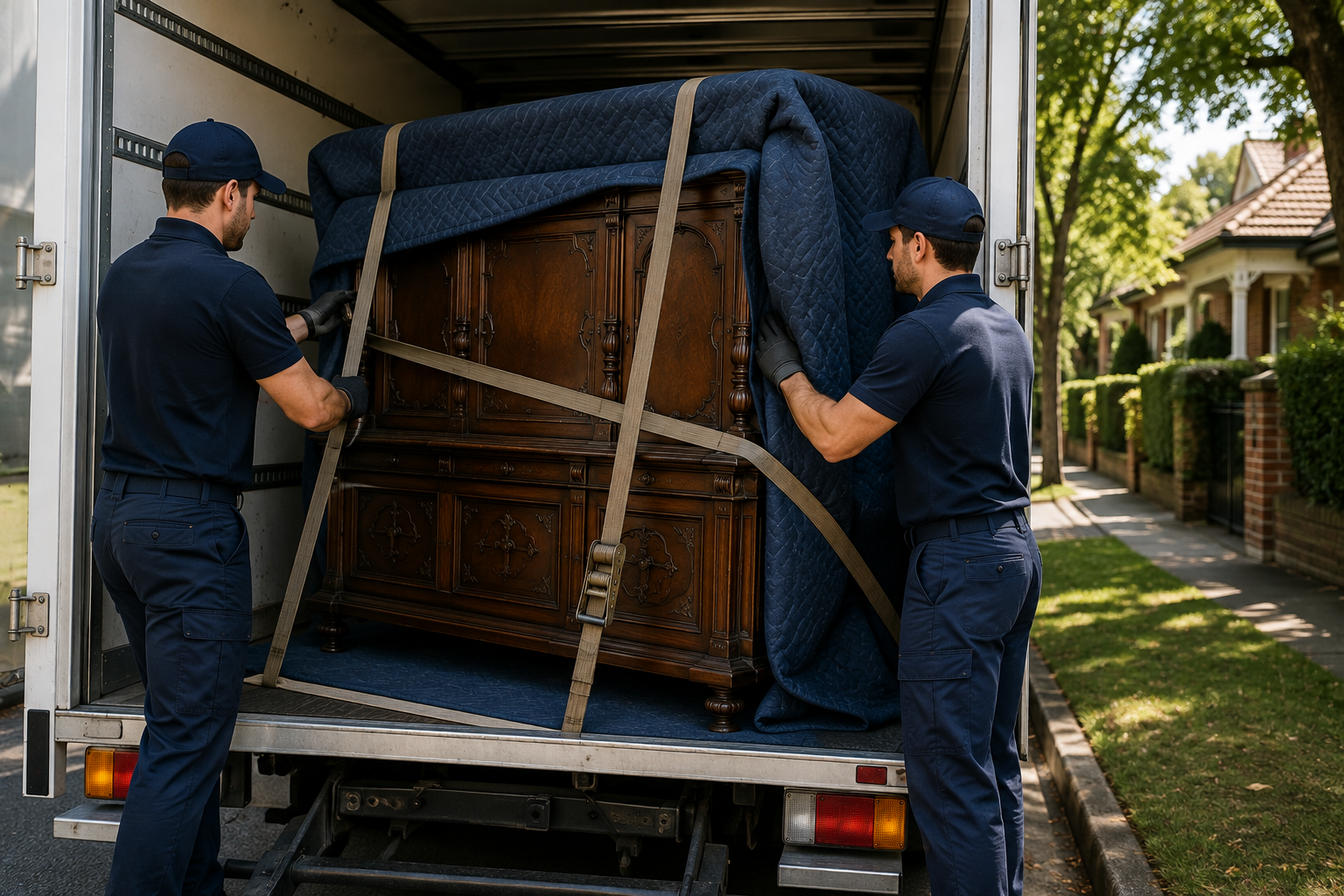
Suitable vehicle restraints.
Equipment selection should match the furniture and property. A heavy antique should never be moved with improvised ropes, unsuitable trolleys or equipment that cannot safely support its load.
For particularly fragile pieces, moving packaging services may be useful when the furniture requires more extensive preparation before transport.
What Should You Look for Before the Truck Leaves?
A final check can prevent simple problems from becoming difficult to resolve later.
Prior to Loading:
Re-photograph the item.
Check loading position.
Ensure surfaces are well padded.
Keep the proper item with removable hardware and keys.
Make sure all drawers and detachable parts are secured.
Ensure that the furniture is properly secured within the vehicle.
Check the furniture upon arrival before removing all the protective layers. Where there is a significant temperature difference, allow delicate finishes to adjust gradually to the new environment as appropriate.
When moving heavy antique furniture, a plan must be made taking into account its condition, construction and surroundings. Measure the route, check each piece, protect delicate areas, and use the correct lifting equipment. A specialist will handle it properly so that unnecessary risks are avoided to valuable or hard to reach furniture.
ProMove Transport is experienced with moving services in Melbourne especially for art and antique items. If you are moving antique furniture and need professional assistance, make sure to contact our team to discuss your requirements prior to moving day.
FAQs
Can you move antique furniture without stripping it of the original finish?
Yes. Antique furniture can usually be moved without affecting the finish at all, with the proper surface protection. Avoid contact with adhesive tape, rough materials or damp wrapping. Use clean protective blankets and secure the item so that the finish does not rub against other furniture or equipment during transit.
Should I polish antique furniture prior to moving it?
Do not polish just before transport unless you know that the product is suitable for the finish. Wrappings are more susceptible when fresh produce is transferred or smeared onto them. Cleaning and restoration work is best planned separately from the relocation process.
How to store antique furniture during a move?
Use a clean, dry storage environment and keep furniture raised from direct floor contact where practical. Do not store in places of uncontrolled humidity or temperature extremes. Valuable antiques must be adequately protected and insured according to their condition and value.
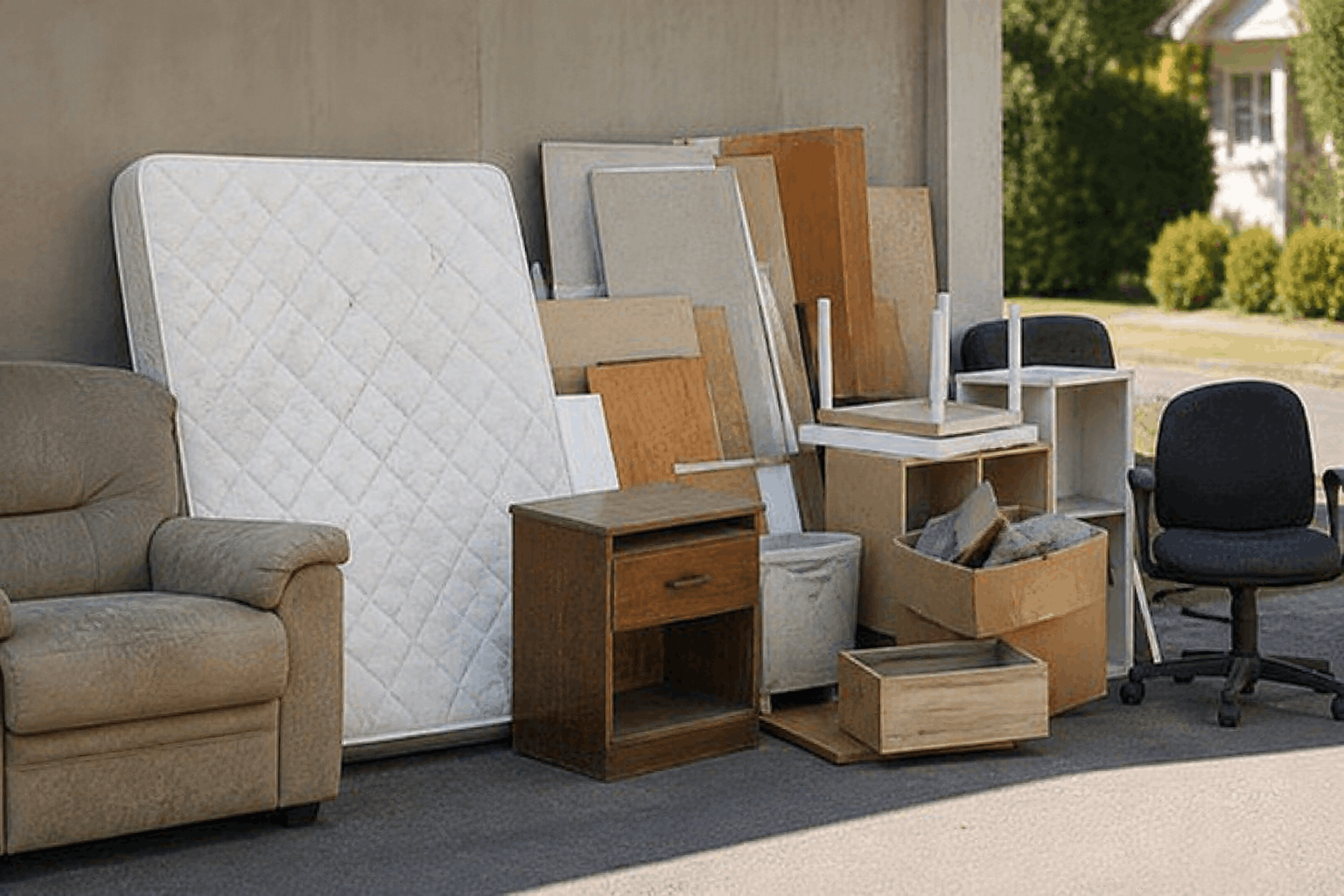
Junk removal can look like a simple weekend job until the pile includes heavy furniture, renovation debris, bulky appliances or materials that need careful handling. A DIY clean-out may work for a few manageable items, while a larger property or renovation project can quickly become time-consuming.
You may be dealing with:
Heavy items that are difficult to lift safely.
Bulky waste that will not fit in a standard vehicle.
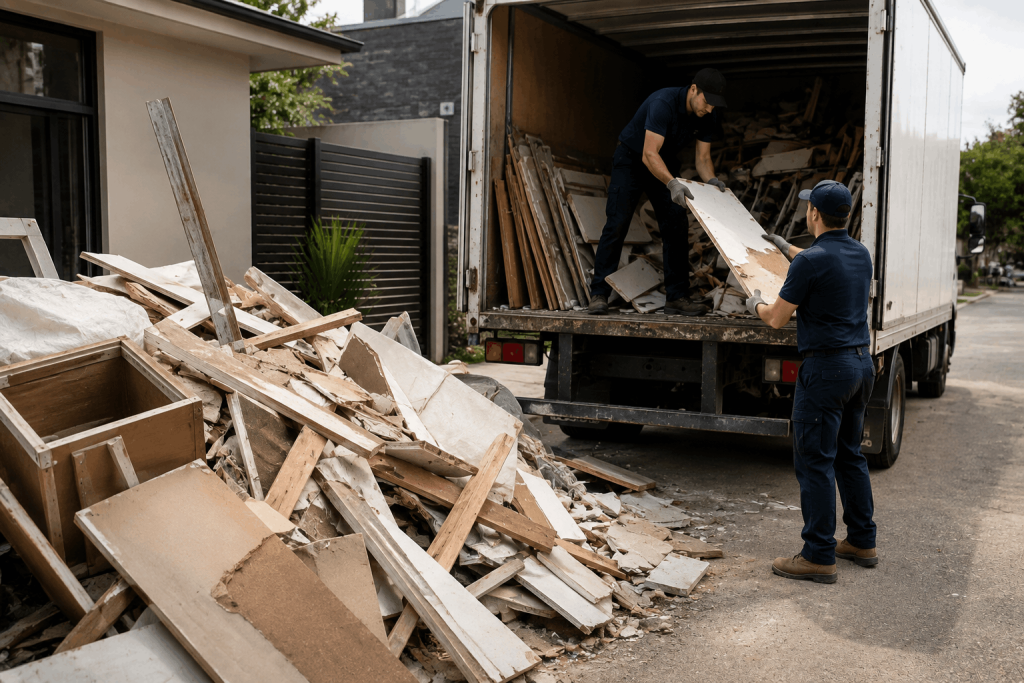
Renovation or demolition debris requiring multiple trips.
Limited time to sort, load and dispose of everything.
ProMove Transport handles rubbish and demolition removal services alongside its broader relocation offering, working across residential and commercial clear-outs where practical handling experience matters as much as the vehicle.
DIY junk removal can suit small quantities of lightweight household waste that you can safely sort, load and dispose of yourself. Professional waste and rubbish removal is more suitable for bulky furniture, large clean-outs, demolition debris and jobs involving difficult access. ProMove Transport combines removal experience with practical handling support for residential and commercial clear-outs.
DIY Removal: When It Works and When It Does Not
DIY removal works best when the waste is limited, lightweight and easy to transport. If you can safely handle the items and have suitable disposal arrangements in place, doing the job yourself is a practical option.
Situation
DIY suitability
A few boxes of unwanted items
High.
Small household clean-out
High.
Lightweight garden or household waste
High.
One or two manageable pieces of furniture
Moderate.
Large furniture removal
Low.
Renovation debris
Low.
Interior demolition waste
Low.
Large commercial clean-out
Very low.
The important factor is capacity. A job that looks contained when everything is sitting inside a property can become considerably harder once items need to be carried through doorways, down stairs and loaded into a vehicle.
Before Choosing DIY, Check Four Things
Weight: Confirm you can lift each item without risking injury.
Access: Check that items can pass safely through doors, hallways, stairs and gates.
Transport: Verify you have a vehicle with enough capacity for the load.
Disposal: Know where each type of waste can legally and practically go.
If any of these creates a genuine problem, professional assistance is likely to save more time and effort than it costs.
What Professional Removal Actually Changes About the Job?
Professional removal converts a series of individual trips into a planned collection process. The team assesses the items, determines the handling requirements, loads systematically and transports using suitable equipment.
For larger clear-outs, this matters because waste rarely comes in one form.
Common Removal Categories
Furniture: Sofas, wardrobes, tables, beds and other bulky household items.
Hard waste: Large unwanted items that cannot go in regular household bins.
Renovation debris: Materials left after property improvement work.
Demolition remnants: Interior materials and structural components requiring careful handling.
Commercial waste: Office, factory and warehouse items accumulated during relocation or refurbishment.
For businesses, professional removal can also reduce disruption. A local removalist with experience across commercial moves can coordinate waste collection alongside other relocation tasks, which reduces the number of separate contractors a business needs to manage.
The Physical Workload People Tend to Underestimate
The lift and carry is only one part of the job. A clean-out typically also involves sorting items, moving heavy objects to a loading point, protecting walls, floors and doorways during transit, loading the vehicle efficiently, separating different waste types, transporting the load and completing the appropriate disposal process.
Additional trips follow if the vehicle capacity runs short. This is why a job that appears to take two hours can stretch across most of a day when handled without the right vehicle, equipment or manpower.
Comparing the Two Options Across the Factors That Matter
The better option depends on more than upfront cost. The total workload, physical risk, equipment access and time commitment each factor into the real comparison.
Factor
DIY
Professional removal
Upfront cost
Usually lower.
Service fee applies.
Labour
You provide it.
Removal team provides it.
Vehicle
Your responsibility.
Suitable transport arranged.
Heavy lifting
Your responsibility.
Team handling.
Multiple trips
Common possibility.
Vehicle capacity planned around the job.
Large furniture
Can be difficult.
Better suited.
Demolition waste
More complicated.
More suitable.
Time commitment
Potentially significant.
Reduced personal involvement.
Physical risk
Higher if poorly planned.
Reduced through team handling and equipment.
Commercial clear-outs
Difficult to manage alone.
Better suited to organised removal.
A professional quote also gives a clearer picture of the actual cost before work begins. Ask what labour, transport and disposal-related services are included so the comparison is accurate.
Jobs Where Professional Removal Is the Safer Choice
Professional help becomes particularly relevant when the job involves significant weight, awkward dimensions, difficult access or a large quantity of waste.
1. Heavy or Oversized Furniture
Large wardrobes, solid timber furniture and bulky commercial fixtures can be difficult to move through confined spaces without damaging the items, walls or the people carrying them.
2. Renovation and Demolition Waste
Building materials can be heavy, sharp, dusty or awkward to handle in quantity. A renovation clean-up can involve considerably more material than expected once walls, fittings or interiors are removed. Rubbish and demolition removal services suited to this type of work account for the handling requirements before the job begins.
3. Difficult Property Access
Stairs, narrow corridors, tight driveways and restricted loading areas can convert a straightforward collection into a demanding physical job with real damage risk.
4. Large Property Clear-Outs
Moving out, downsizing, preparing a property for renovation or clearing a commercial site can generate more waste than a household vehicle can manage in a single trip.
Practical point: Measure the route along with the item. A wardrobe may physically fit through a doorway but still fail to navigate a turn in a narrow hallway. Checking turning points before lifting prevents damage and wasted effort.
What to Tell a Removal Service Before Booking
Not every removal job has the same requirements. Giving the removalist enough information upfront means the crew, vehicle and equipment can be matched to the actual work rather than an estimate.
Tell them about:
The approximate volume of waste.
The largest or heaviest items.
Whether demolition has already taken place.
Stairs, narrow access points or restricted parking.
The type of property.
Whether the job is residential or commercial.
Whether sorting is required before removal.
Any items that need special handling.
What About Packing and Relocation Work?
Junk removal often coincides with a move. Unwanted furniture may need clearing before a relocation, old office items before a commercial move, or a property before handover. In these situations, combining related services reduces scheduling complexity.
ProMove Transport also provides packing and removalists services, allowing customers to manage different parts of a relocation through one provider where that suits the project.
Demolition Waste and What to Confirm Before the Job
Yes, demolition and rubbish removal can form part of the same project, although the exact materials and work scope need to be discussed in advance.
Interior demolition may produce:
Removed fixtures.
Cabinetry.
Flooring materials.
Wall components.
Broken furniture.
General construction debris.
The removal team needs to know what has been demolished and what remains in place. Demolition work and waste collection are separate tasks with different handling requirements, and that distinction affects how the job is quoted and staffed.
If the project involves specialist materials or regulated waste, confirm whether the service covers those materials before scheduling begins.
Valuable, Fragile or Unusual Items Need Separate Planning
Some items should not be treated as ordinary junk simply because they are leaving the property.
Furniture with high sentimental or financial value may need careful handling even when the owner no longer wants it in its current location. The same applies to antiques, artwork, collectables, delicate furniture, sensitive equipment and high-value household contents.
For particularly delicate pieces, art and antiques shipping services are more appropriate than standard junk removal. The handling approach, packaging requirements and transit conditions are different enough that combining the two services in a single job creates unnecessary risk.
A useful planning step: separate valuable or fragile belongings before the removal team arrives. This prevents items that still need to be retained from being mixed with those scheduled for removal.
A Simple Decision Test Before You Start
Choose DIY When
The quantity is small.
Items are lightweight.
You have suitable transport.
Disposal arrangements are straightforward.
You can complete the work without unsafe lifting.
Consider Professional Removal
Items are heavy or oversized.
There are multiple rooms to clear.
Demolition or renovation is involved.
Access is difficult.
The property is commercial.
Multiple vehicle trips would be required.
The work needs to be completed within a set timeframe.
The decision should account for the complete workload. The removal fee is one variable; the time, physical effort, risk and logistics involved are the others.
Key Questions to Ask Yourself Before Starting
1. How much physical work is involved?
Count the lifting, carrying, stairs, loading and unloading rather than simply looking at the volume of rubbish.
2. How many trips will I need?
A small vehicle can make a low-cost DIY job expensive in time and fuel if several disposal trips are required.
3. What happens if something goes wrong?
Consider damage to walls, floors, furniture or yourself. If the consequences of a mistake are significant, professional assistance deserves serious consideration.
DIY junk removal suits small, contained jobs where the items are manageable and disposal is straightforward. As the work grows to include heavy furniture, large quantities, difficult access, commercial premises or demolition debris, the physical and logistical demands shift the balance toward professional support.
ProMove Transport offers waste and rubbish removal services across Melbourne for customers managing hard waste, renovation debris, commercial clear-outs and relocation-related disposal. The team assesses jobs around their actual handling requirements rather than volume estimates alone.
If you are uncertain whether your clean-out is suitable for a DIY approach, speak with ProMove Transport about the items, access conditions and volume involved before committing to either option.
FAQs
Is junk removal suitable for a house move?
Yes. Removing unwanted furniture and household items before or during a move reduces the volume of property that needs to be transported and can make packing and loading more organised. Separate items you intend to keep from those being removed before the collection begins.
Should I remove everything before a demolition project?
Not necessarily. The required sequence depends on the project scope. Items that need to remain should be identified before demolition begins, while materials scheduled for removal should be clearly separated where practical.
Can commercial properties use junk removal services?
Yes. Offices, warehouses, factories and other commercial premises can require large-scale clear-outs during relocation, refurbishment or closure. Volume, access conditions and waste type should all be discussed before the work is scheduled.
How can I get a more accurate removal quote?
Provide photos, approximate quantities, item dimensions and details about access conditions. Mention stairs, restricted parking, demolition debris and particularly heavy items. These details allow the removalist to assess the actual workload rather than estimate from volume alone.
Moving fragile furniture over a long distance isn’t the same as shifting it a few streets away. The furniture gets handled more, sits inside the truck for hours on end, gets exposed to road vibration, pressure, and changing conditions along the way.
For homeowners, renters, and businesses, the most common risks include:
Glass panels, mirrors, or marble pieces cracking under pressure.
Timber furniture moving, swelling, or warping during the journey.
Furniture arriving with loose joints, cracked frames, or weakened fixings.
Scratches, dents, and rubbed finishes even when items were covered.
Damage caused by poor loading, rushed preparation, or unsupported heavy items.
ProMove Transport has helped families and businesses move valuable furniture safely across Victoria. As professional movers in Melbourne, we understand how protecting fragile furniture starts before moving day, not after something breaks.
This guide covers the most common mistakes that cause fragile furniture to break during a long distance move, and how better planning helps cut down on avoidable damage.
Poor preparation, weak packing, incorrect lifting, poor truck loading, road vibration, and shifting weather conditions sit behind most fragile furniture breakages on long distance moves. Professional movers in Melbourne like Promove Transport help reduce these risks by assessing furniture materials, securing fragile items correctly, and planning each stage of packing, loading, transport, and unloading around the structure of the furniture.
Why Fragile Furniture Breaks More Easily During Long Distance Moves
Fragile furniture breaks more easily on long distance moves simply because it’s in motion for hours at a stretch. Not all damage is caused by items being dropped. Vibration, pressure, and shifting weight can gradually wear down joints, frames, glass, and finishes all on their own.
Many people assume furniture damage only happens during lifting. In reality, damage often builds up slowly over the course of the transport itself.
Transport force
What it can damage
Continuous road vibration
Loose screws, weak joints, and worn fixings
Sudden braking
Furniture shifting inside the truck
Poor weight distribution
Cracked frames, panels, or legs
Friction between items
Scratches, dents, and damaged finishes
Temperature and humidity changes
Timber movement, swelling, or warping
Unsupported heavy surfaces
Cracks in marble, stone, or glass
Different materials respond in their own ways. Timber expands, contracts or lifts when exposed to moisture. A cracked edge on glass usually comes down to pressure landing in the wrong spot, and marble or stone surfaces can break outright if they flex during transport.
Experienced removalists know this, which is why they assess fragile furniture by more than just size and weight. They look at how each item is built, where it’s weakest, and what kind of support it needs on the journey.
Mistake 1: Moving Furniture Without Checking Its Condition First
Skipping a proper inspection before loading fragile furniture is one of the biggest mistakes people make on a move. Small weaknesses hide easily in older furniture, daily-use items, and delicate pieces, often going unnoticed until damage becomes apparent.
A few things worth checking before moving day:
Loose screws or bolts.
Wobbly legs or frames.
Hairline cracks.
Weak hinges.
Loose handles.
Worn drawer runners.
Movement around joints.
Existing scratches or dents.
At home, these issues often appear insignificant. Put that same furniture through a long distance move, though, and those small issues tend to get a lot worse. Vibration loosens fittings looser, and lifting puts direct pressure on areas that are already weak.
Loose fittings, weak joints, and other risks like these are exactly what experienced furniture removalists in Melbourne check for before loading valuable items onto the truck.
Mistake 2: Keeping Large Furniture Fully Assembled
Large furniture isn’t automatically safer when it’s moved in one piece. Keeping it fully assembled quite often raises the risk of breakage instead of lowering it.
A fair few pieces benefit from partial disassembly before the move, including:
Dining tables.
Bed frames.
Entertainment units.
Modular lounges.
Cabinet doors or removable shelves.
Glass inserts or detachable panels.
Taking a piece apart even partially lightens the load, takes pressure off weak joints, and lets each section get wrapped and protected on its own.
A dining table, for instance, might look solid enough, but its legs can take heavy sideways pressure when carried through doorways or loaded into a truck. Taking the legs off reduces that stress and makes the table far easier to wrap and support properly.
The goal isn’t taking everything apart. It’s removing the parts most likely to bend, twist, rattle, or break during handling.
Mistake 3: Leaving Drawers, Shelves, Or Cabinets Full
Leaving belongings inside furniture might save a bit of time, but it raises the risk of damage considerably.
Extra weight can:
Strain drawer runners.
Make lifting less stable.
Pull cabinet frames out of alignment.
Change the furniture’s centre of gravity.
Increase pressure on joints during transport.
Full drawers can also slide, shift, or push against the frame from the inside as the truck moves. Over a long distance, that repeated internal movement can cause damage that stays invisible until the furniture gets unpacked at the other end.
Before the move, clear loose contents out of drawers, cabinets, and shelves. If shelves are adjustable, take them out or secure them properly so they can’t rattle around inside the unit.
Mistake 4: Using The Wrong Packing Materials
Wrapping furniture matters, sure, but the wrong materials create a false sense of protection. Household blankets, towels, or thin covers guard against light surface marks well enough, however, they’re not built to handle repeated road vibration over hours.
Better protection usually involves:
Thick moving blankets for surface protection.
Corner guards for vulnerable edges.
Edge protection for glass and mirrors.
Proper padding between furniture pieces.
Secure wrapping that holds protection in place.
Straps or restraints to stop movement inside the truck.
Packing needs to protect both the surface and the structure underneath. For example, a polished timber cabinet needs protection against rubbing. A glass panel needs edge support. A marble tabletop needs support that stops it from flexing.
Good packing isn’t about piling on more material everywhere. It’s about putting the right protection in the right places.
Mistake 5: Wrapping Furniture Too Loosely Or Too Tightly
Loose wrapping allows blankets or plastic shift during transport. As the truck travels, that movement rubs against furniture surfaces and damages polish, paint, or leather.
Overly tight wrapping causes its own problems too. Excessive pressure can affect timber edges, cane furniture, decorative moulding, or upholstered sections. Trap heat or moisture under plastic wrap for too long, and that can affect some finishes as well.
A better approach:
Use padding directly against vulnerable surfaces.
Keep the wrap firm enough to stay in place.
Avoid excessive pressure on delicate edges.
Protect corners separately.
Handle sensitive materials according to their finish and construction.
Glass, mirrors, and stone surfaces need more than surface wrapping alone. They need support that stops them flexing or taking pressure from nearby furniture.
Mistake 6: Loading The Truck Without A Proper Plan
Truck loading has a major effect on whether fragile furniture arrives in one piece. A long distance move isn’t just about fitting everything into the vehicle. The load needs balancing, supporting, and restraining properly.
Poor loading forces fragile items to carry weight they were never built to hold.
Avoid these loading mistakes:
Placing heavy items on top of fragile furniture.
Loading marble or glass without upright support.
Leaving gaps that allow items to build momentum.
Leaning heavy wardrobes against glass cabinets.
Letting timber surfaces rub against chairs or metal frames.
Placing delicate pieces where they can shift during braking.
Professional movers usually build stable load zones from the ground up. Heavier items go in low and get secured first, and fragile pieces then take their spot where they’re protected from pressure, rubbing, and movement.
This matters especially for apartment moves, office relocations, and busy access areas, where restricted parking, lifts, loading zones, staircases, and narrow hallways can all raise handling risks if the move isn’t planned properly from the start. Experienced movers and removalists in Melbourne CBD know this aspect particularly well.
Mistake 7: Underestimating Vibration, Weather, And Road Conditions
The journey itself causes a lot of long distance furniture damage, more than people tend to expect. Roads, driveways, corners, and shifting weather conditions all wear away the fragile furniture over the course of the trip.
Timber reacts strongly to this kind of exposure, since it naturally responds to temperature and moisture changes as conditions shift. Older, handcrafted, or already weakened pieces can expand or contract slightly over the course of a long move.
Road vibration can also affect:
Screws
Dowels
Glued joints
Hinges
Drawer runners
Internal fixings
Glass panels
Stone surfaces
Different items need different handling:
Furniture type
Main risk
Safer handling approach
Solid timber furniture
Joint movement or warping
Stable support and secure restraint
Glass furniture
Cracking or edge pressure
Upright support and edge protection
Marble or stone pieces
Stress cracks
Reinforced support and careful positioning
Antique furniture
Weak aged materials
Gentle handling and reduced movement
Pianos
Weight imbalance and timber sensitivity
Specialist equipment and controlled handling
Careful lifting, positioning, and restraint aren’t optional extras for equipment like piano. They form the foundation of the entire task, which is exactly why experienced piano movers in Melbourne build their process around them. Antique cabinets, fine timber furniture, and other valuable pieces benefit from that same level of care.
Mistake 8: Treating Specialist Furniture Like Ordinary Furniture
Some furniture genuinely needs specialist handling because of its weight, construction, or value. Moving these items with standard methods raises the risk of damage considerably.
Specialist items may include:
Pool tables.
Marble dining tables.
Antique cabinets.
Large display cabinets.
Glass top furniture.
Designer furniture.
Grandfather clocks.
Fine timber cabinetry.
Professional pool table movers, for example, don’t treat a slate pool table like an ordinary piece of furniture. Slate sections, frames, legs, and felt surfaces often need careful dismantling, protection, and a proper reassembly plan. Moving a pool table fully assembled puts unnecessary stress on both the frame and the slate.
The same principle carries over to pianos, marble tables, and large fragile cabinets. It’s not just the weight of the item that matters. It’s how that weight gets distributed and where pressure lands during lifting and transport.
When Fragile Furniture Should Be Left To Professional Movers
Professional help is worth considering when the furniture is difficult to replace, expensive to repair, heavy, delicate, or important to you personally.
Strongly consider professional help if:
The item needs dismantling and reassembly.
The furniture has sentimental or business value.
You’re unsure how to secure it safely in the truck.
The furniture is antique, designer, or custom-made.
You’re moving across regional Victoria or interstate.
The item has glass, marble, stone, or delicate timber.
The move involves stairs, lifts, tight access, or long carries.
Professional movers do more than lift and transport furniture. They assess access, spot weak points, choose suitable equipment, protect surfaces, control loading pressure, and cut down on unnecessary handling. That kind of planning can make a real difference on a long distance move.
Separate glass, marble, mirrors and art work from heavy furniture.
Continue wrapping firm, but don’t wrap too tightly around delicate areas.
Use the proper moving blankets, padding, edge protectors and corner guards.
Rely on specialist movers for pianos, pool tables, antiques, and stone surfaces.
Remove drawers, shelves, glass inserts, and detachable parts where practical.
Conclusion
Poor preparation, weak packing, incorrect loading, unsupported heavy items, vibration, and changing conditions along the way are usually behind fragile furniture breaking on a long distance move. A careful assessment of each item’s material, structure, weak points, and handling requirements goes a long way toward preventing most of that damage.
ProMove Transport brings that same careful planning to every job as professional movers in Melbourne, helping homeowners and businesses move fragile, valuable, and specialist furniture from start to finish. Timber furniture, antiques, glass pieces, a piano, or a pool table, whatever’s being relocated, the safest move starts with proper preparation well before the truck arrives. Get in touch with us to know how we can help you with your move.
FAQs
Do professional movers check fragile furniture before loading it?
Yes. Professional movers usually inspect fragile or expensive furniture before loading, so they are aware of weak joints, loose parts, delicate finishes, glass areas or access risks early on. That inspection determines if an item is disassembled, padded, moved differently or kept separate in the truck.
What should I tell movers before they arrive?
Before moving day, identify any fragile, heavy, antique, glass, marble or high value items for your movers. Stairs, narrow corridors, lift bookings, parking restrictions, loading areas and any furniture that is already damaged or has weak joints are also worth mentioning.
Can fragile furniture be moved from an apartment or CBD building safely?
Yes, though it calls for extra planning. Lifts, tight access, limited parking, loading docks, and building rules all come into play with buildings and apartments. Working through these details early cuts down on unnecessary handling and helps fragile furniture move through the property more safely.
Should I repair weak furniture before a long distance move?
A chair, table, cabinet, or frame that already feels loose is worth repairing or stabilising before the move, where that’s practical. Long distance transport tends to make existing weaknesses worse, especially with vibration and repeated handling in the mix.
Are specialist movers needed for pool tables and pianos?
Yes, specialist help is strongly recommended for pool tables and pianos. These items sit heavy and awkward, and they’re sensitive to pressure landing in the wrong spots. Specific equipment, careful weight control, and planned positioning during transport tend to matter far more here than with standard furniture.