

Precautions To Take While Moving Heavy Antique Furniture
Moving heavy antique furniture takes more planning than a standard household move. Older wardrobes, cabinets, dining tables and other valuable pieces can be heavy, fragile and difficult to manoeuvre through Melbourne homes.
A rushed move can lead to scratches, dents or broken fittings, damage to floors, walls, door frames or staircases, cracks caused by poor lifting or uneven weight distribution, and loss of original hardware or delicate decorative details.
ProMove Transport handles specialised relocation work where furniture condition, access and safe handling all matter. Its experience across Melbourne provides useful context for choosing suitable art & antiques shipping services and preparing valuable pieces for transport.
Moving antique furniture is not just a matter of strength required. You have to look at each piece, protect surfaces, plan your route and use the correct equipment. Some antiques require special attention, as the standard moving process involves unnecessary risks. Before any move begins, ProMove Transport will inspect the furniture, access points, and protective materials.
Should Antique Furniture Be Inspected Before Moving?
Inspect the furniture before lifting or wrapping it because age can affect joints, veneers, finishes and internal supports.Check for:| What To Check | Why It Matters |
|---|---|
| Loose joints | Lifting can worsen existing movement. |
| Cracks or splits | Pressure may cause further structural damage. |
| Veneer or inlay | Loose sections can catch during wrapping. |
| Drawers and doors | They can open during handling and shift the centre of weight. |
| Existing damage | Photos provide a clear record before transport. |
Here is something most people miss. The weakest point of an antique is not always visible from the outside. A cabinet might look solid while its aged joints have limited strength. Test movement carefully before deciding how the item should be lifted.Photograph valuable surfaces, fittings and existing marks before the move. Keep removable handles, keys and small hardware together in labelled packaging.
Protect Your Antique Furniture During Relocation
What Is the Safest Way To Protect Antique Furniture?
Good protection combines padding, surface protection and careful handling. Wrapping alone will not stop an antique from getting damaged inside a vehicle.
Use:
- Clean moving blankets for finished surfaces.
- Corner protection around vulnerable edges.
- Suitable wrapping for decorative or polished sections.
- Floor protection along the planned route.
- Straps and lifting equipment appropriate for the item’s weight.
Do not put adhesive tape directly on polished wood, aged finishes or veneer. Tape can leave residue or damage the surface when removed.
For delicate pieces, the packaging method should match the furniture’s construction and finish. Do not use the same materials for everything.
When Should Heavy Antique Furniture Be Disassembled?
Only disassemble an antique when it actually reduces risk and the construction allows it safely. Removing detachable legs, shelves or sections can reduce overall weight and make tight access easier.
But older furniture may use traditional joints, aged screws or fittings that should not be forced.
Before disassembly:
- Photograph how components fit together.
- Label hardware and fittings.
- Keep small parts in sealed, labelled bags.
- Record fragile components separately.
- Check whether the piece has previously been repaired.
What most experts miss: Disassembly can sometimes create more risk than moving the furniture intact. If a joint has weakened with age, forcing it apart may cause permanent damage. The decision should depend on construction, condition and access, not weight alone.
How Should You Plan Doorways, Hallways And Stairs?
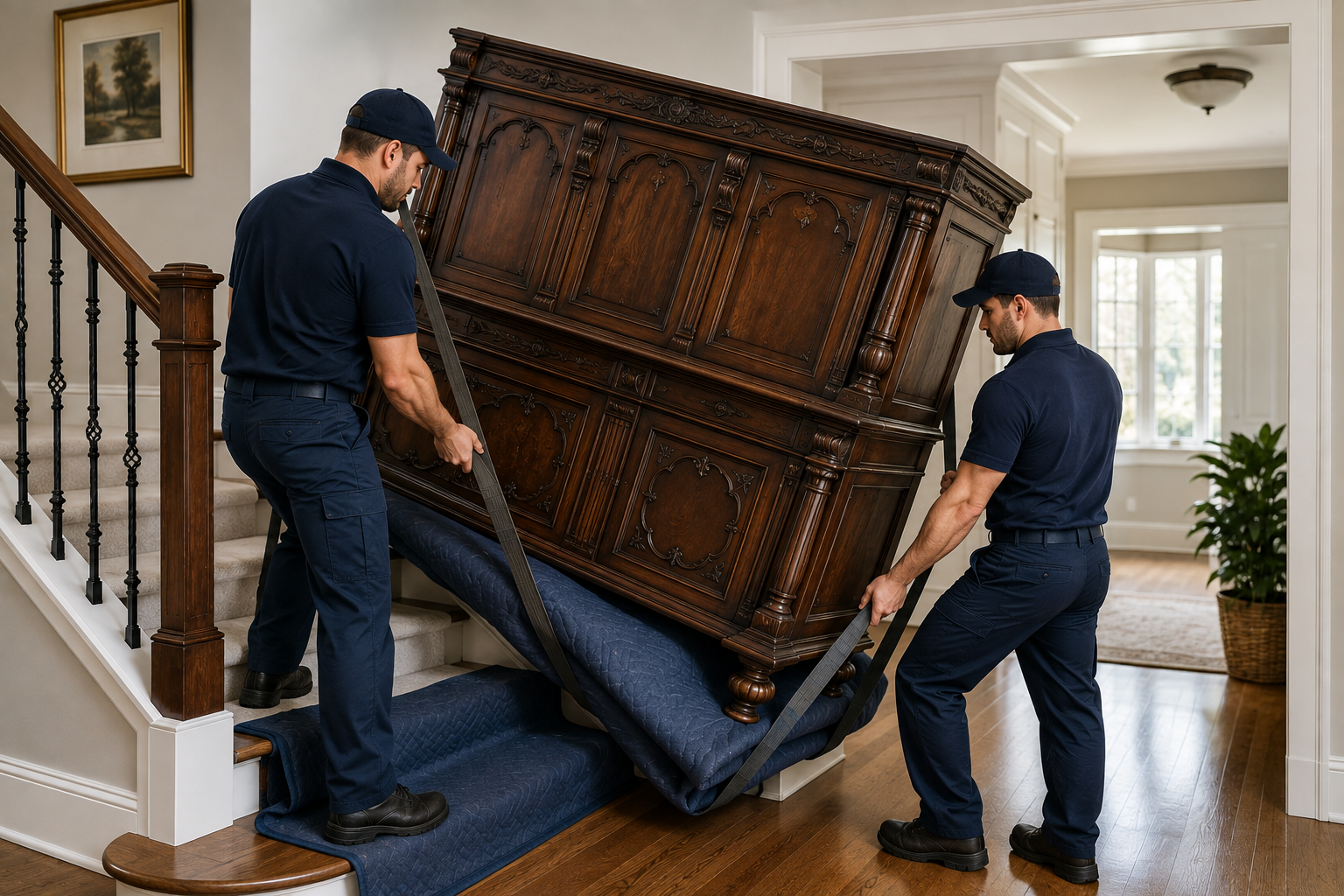
Measure the complete route before moving the furniture. The furniture’s dimensions alone do not tell you whether it can pass safely through a property.
Measure:
- Furniture height, width and depth.
- Door opening width and height.
- Hallway width.
- Staircase width and turning points.
- Ceiling height around landings.
- Lift dimensions where applicable.
Make sure you clear a path before you move, and keep any fragile walls and floors safe.
This is where experienced furniture removalists can be of practical value. A team can judge turning points and carrying positions before the item is lifted, cutting down on last-minute manoeuvring.
Do You Need To Hire Professionals For Antique Heavy Furniture?
For large, fragile, or expensive antiques, professional handling is usually the safer bet. The decision should take into account the weight, condition and value of the item, and any access restrictions and available equipment.
| Situation | Practical Approach |
|---|---|
| Small, stable antique with easy access | You may be able to handle it gently yourself. |
| Heavy solid-wood cabinet | Professional help is the safer choice. |
| Rare or highly valuable antique | Professional handling is recommended. |
| Narrow or difficult-to-access stairs | A professional assessment is recommended. |
| Several heavy items | A planned moving team can reduce manual handling strain. |
If you need a removal company in Melbourne, ask what equipment, protection methods and insurance arrangements apply to valuable furniture before booking.
What Equipment Helps Prevent Damage During The Move?
The right equipment reduces uncontrolled lifting and helps distribute weight during handling.Common equipment includes:
- Furniture dollies.
- Lifting straps.
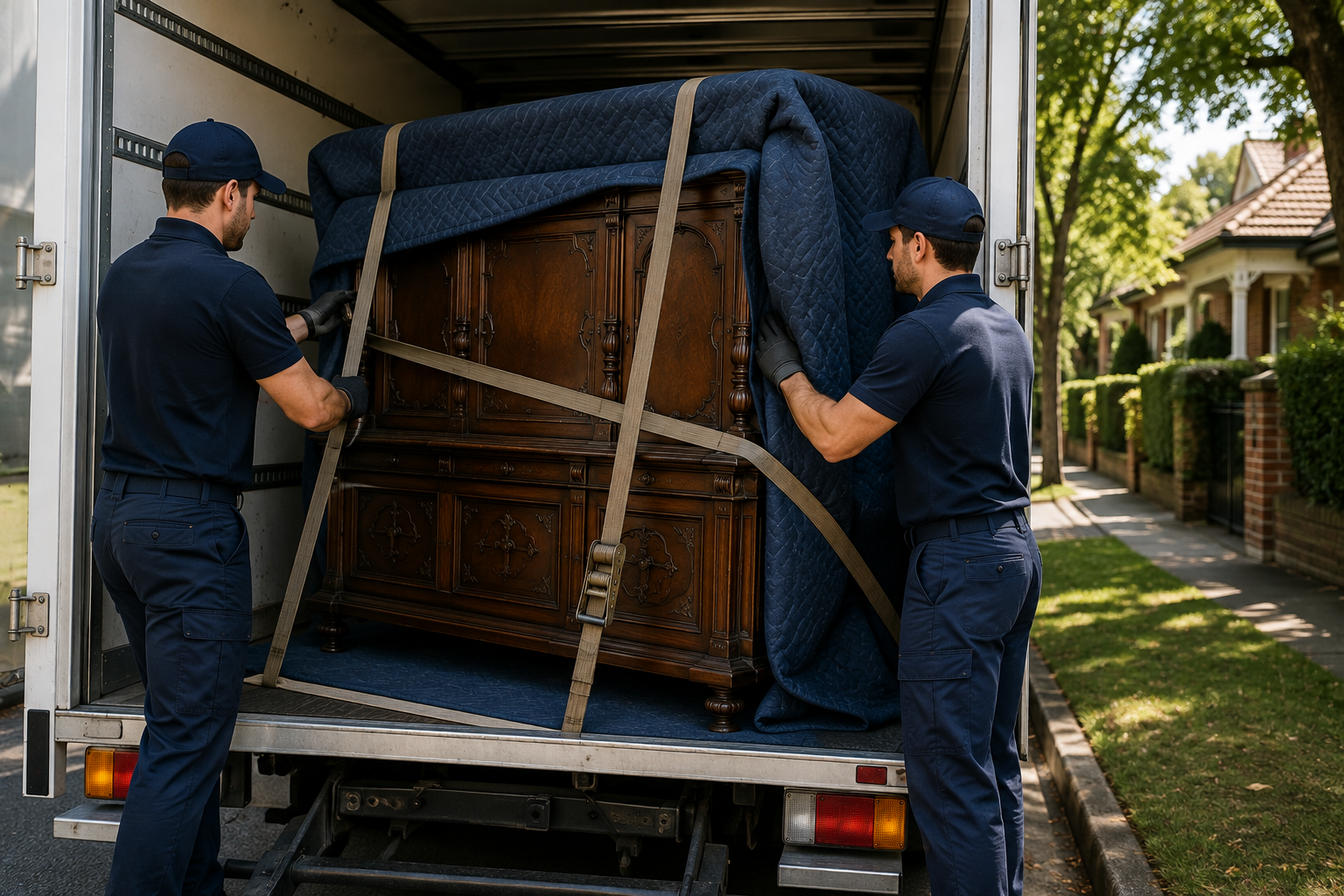
- Protective moving blankets.
- Floor runners and protective sheets.
- Corner guards.
- Ramps where appropriate.
- Suitable vehicle restraints.
Equipment selection should match the furniture and property. A heavy antique should never be moved with improvised ropes, unsuitable trolleys or equipment that cannot safely support its load.
For particularly fragile pieces, moving packaging services may be useful when the furniture requires more extensive preparation before transport.
What Should You Look for Before the Truck Leaves?
A final check can prevent simple problems from becoming difficult to resolve later.
Prior to Loading:
- Re-photograph the item.
- Check loading position.
- Ensure surfaces are well padded.
- Keep the proper item with removable hardware and keys.
- Make sure all drawers and detachable parts are secured.
- Ensure that the furniture is properly secured within the vehicle.
Check the furniture upon arrival before removing all the protective layers. Where there is a significant temperature difference, allow delicate finishes to adjust gradually to the new environment as appropriate.
Move Your Antique Furniture With Greater Care
Conclusion
When moving heavy antique furniture, a plan must be made taking into account its condition, construction and surroundings. Measure the route, check each piece, protect delicate areas, and use the correct lifting equipment. A specialist will handle it properly so that unnecessary risks are avoided to valuable or hard to reach furniture.
ProMove Transport is experienced with moving services in Melbourne especially for art and antique items. If you are moving antique furniture and need professional assistance, make sure to contact our team to discuss your requirements prior to moving day.
FAQs
Can you move antique furniture without stripping it of the original finish?
Yes. Antique furniture can usually be moved without affecting the finish at all, with the proper surface protection. Avoid contact with adhesive tape, rough materials or damp wrapping. Use clean protective blankets and secure the item so that the finish does not rub against other furniture or equipment during transit.
Should I polish antique furniture prior to moving it?
Do not polish just before transport unless you know that the product is suitable for the finish. Wrappings are more susceptible when fresh produce is transferred or smeared onto them. Cleaning and restoration work is best planned separately from the relocation process.
How to store antique furniture during a move?
Use a clean, dry storage environment and keep furniture raised from direct floor contact where practical. Do not store in places of uncontrolled humidity or temperature extremes. Valuable antiques must be adequately protected and insured according to their condition and value.
