

7 Tips to Make Your Office Move Stress-Free
Moving an office means much more than desks and boxes. Staff need to know what is happening, important equipment needs to be treated with care and the business still needs to function while the workplace is changing.
In the absence of a clear plan, common problems include:
- Workers packing at different times.
- Furniture arriving before the rooms are ready.
- Important equipment is becoming hard to identify.
- Jobs to do before moving.
For businesses looking for commercial moving services in Melbourne, ProMove Transport offers years of practical moving experience in furniture, packing, transport and specialised relocation requirements. Keep reading, as these tips focus on the decisions that can make an office move more controlled and less disruptive.
Focus: Reducing disruption during an office move through early decisions, staff preparation and careful sequencing of moves.
Key considerations: Office inventory, employee responsibilities, furniture preparation, equipment handling and business continuity.
Moving Approach: Business Removalists manage the physical move, in the meantime the business focuses on staff, technology and operational priorities.
Professional Insight: ProMove Transport uses practical moving experience on furniture, packing and specialised items.
Outcome: A smoother move with fewer avoidable interruptions before, during and after the move.
1. What Should You Decide Before Planning the Physical Move?
Start by deciding what is actually moving. An office relocation is a useful opportunity to separate essential assets from items that are obsolete, duplicated or no longer required.
Create categories as show as follows:
| Category | Action |
|---|---|
| Moving | Include in the relocation plan |
| Replacing | Arrange the replacement separately |
| Removing | Dispose of, donate or recycle appropriately |
| Storing | Keep aside for future requirements |
This decision should happen before packing begins. Otherwise, employees may spend time preparing items that will never enter the new office.
Check larger furniture first, especially desks, cabinets, meeting tables and storage units. Their size can affect the practical route into the new premises.
Practical takeaway: Reduce the volume before you organise the move. It gives the relocation team a clearer list of what needs to be handled.
Plan Your Office Move With Confidence
2. How Can You Prepare Staff Without Disrupting Their Work?
Instead of asking employees to “get ready for the move,” give them specific jobs to do. Depending on their equipment and records, different teams may require different instructions.
For instance:
- Staff may remove personal items from desks.
- Department heads can determine essential files and equipment.
- IT staff can control computers and network equipment.
- Set a packing deadline before your moving day.
- Managers can instantly assess teams’ needs after the move.
This gives the moving team a prepared workplace rather than an office that is still being packed when loading starts.
Use clearly identified boxes for personal and departmental belongings. Confidential records should remain under the business’s normal privacy controls.
Practical takeaway: Staff should know what they are responsible for, what they should leave alone and when their preparation must be finished.
3. How Do You Make Large Office Furniture Easier to Move?
Prepare large furniture corresponding to its construction and the path it needs to take. Some parts must be taken apart, some can be moved as they are.
Common candidates for disassembly include:
- Large desks.
- Bed style staff furniture where applicable.
- Modular workstations.
- Meeting tables.
- Cabinets with removable sections.
Keep screws and fittings together in labelled bags. Photograph complicated assemblies before taking them apart.
Heavy pieces require appropriate handling equipment. The decision to deconstruct should consider the construction of the furniture, its weight and the route of access. Taking everything apart can lead to unnecessary re-assembly.
Practical takeaway: Dismantle when it really works on handling. Do not take apart furniture simply because it is large.
4. How Should Sensitive Office Equipment Be Handled?
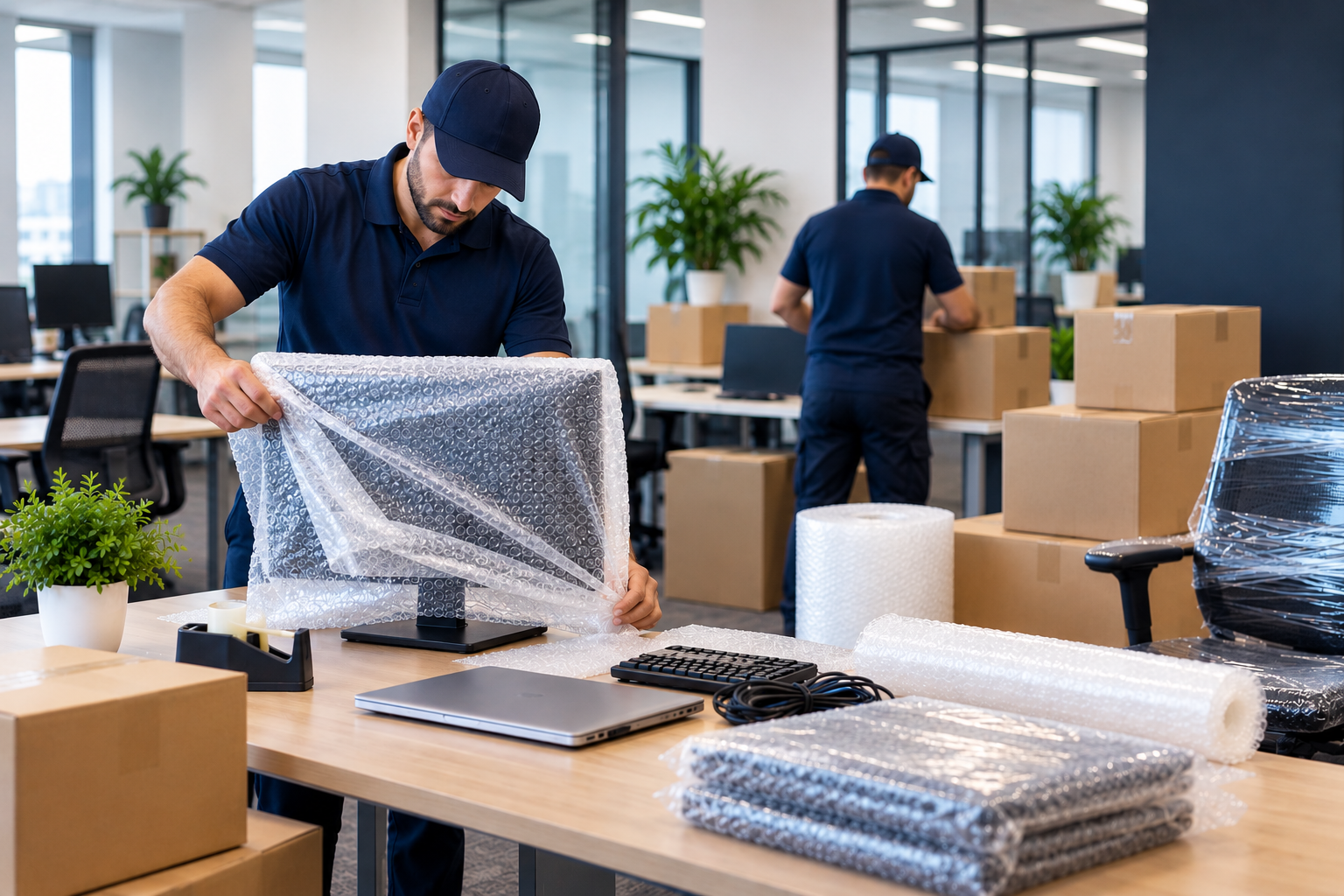
Prior to the loading, the crew must identify sensitive equipment. Computers, monitors, printers, specialist equipment and fragile items may need a different level of protection to standard office furniture.
For technology, coordinate physical movement with a person who disconnects and reconnects. Store cables and accessories with the adjunct equipment and do not place loose parts into general boxes.
For fragile or valuables:
- Find them before move-in day.
- Use appropriate protective materials.
- Keep related components together.
- Inform the moving team of any special handling requirements.
- Confirm where each item needs to be placed.
Practical takeaway: Tell your moving team about unusual items before the move. Last minute information can change the handling approach.
5. What Is the Best Way to Sequence the Move?
Move in an order that supports the business rather than simply emptying one room after another.
A useful sequence is:
- First: Non essential records, surplus furniture and rarely used items.
- Next: General office furniture and departmental belongings.
- Later: Standard work stations and equipment.
- Last: Items employees must have immediately when operations resume.
This helps to segregate low priority relocation work from business critical equipment.
If the move is a staged one, keep a written record of what has already been moved. It stops teams looking for items still at the old premises.
Practical takeaway: The sequence of the move should align with business priorities, not just the office’s physical layout.
6. What Should You Check About the Building Before Moving Day?
Building rules can affect when and how relocation happens. Check these requirements and confirm the final moving schedule with the building manager.
Ask about:
- Lifts bookings.
- Loading zones.
- Access for vehicles.
- Allowed moving times.
- Security protocols.
- Protect the floor.
- Big stuff is restricted.
For multi level offices consider stairs and alternative access. Bulky or awkward furniture may require extra handling equipment or a different route.
Practical takeaway: A building inspection should answer one question: can every planned item physically get from the vehicle to its intended room?
7. How Can You Keep the Business Running After the Move?
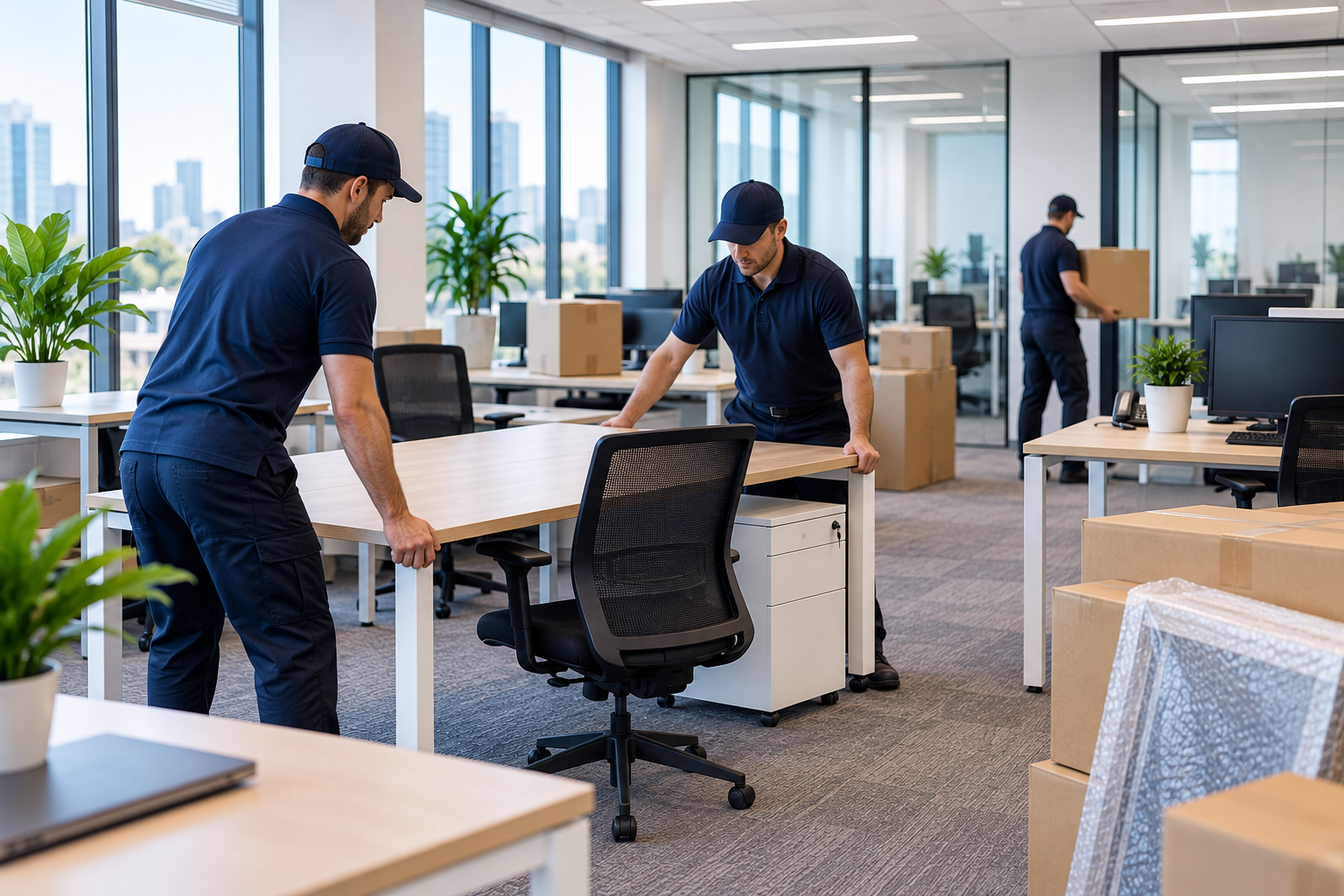
Plan the first working day separately from moving day. A new office can be physically complete while still being operationally unready.
Prioritise:
- Essential workstations.
- Internet and communications.
- Computers and screens.
- Shared printers and equipment.
- Meeting spaces required immediately.
- Remaining storage and non essential items.
Keep an issue list for anything that arrives damaged, is missing or needs repositioning. Deal with urgent problems first rather than trying to finish every unpacking task simultaneously.
If your business has customers visiting the premises, update addresses, signage and visitor information before reopening.
A removalist company can handle the physical relocation while your internal team concentrates on operational tasks that only the business can complete.
Practical takeaway: Your first day should be planned around what employees need to work, not around whether every carton has been unpacked.
Prepare Your Business For A Smooth Relocation
Conclusion
A successful office relocation comes from making the right decisions before the truck arrives. Decide what deserves a place in the new workplace, give staff clear responsibilities, prepare furniture according to its construction, separate sensitive equipment from general items and plan the first working day around essential operations.
ProMove Transport brings years of practical experience to commercial moving services across Melbourne, with support for office furniture, packing, transport and specialised moving requirements.
If your business is preparing for a workplace relocation, contact ProMove Transport to discuss the furniture, equipment, access conditions and timing involved.
FAQs
Should an office move be completed in one day?
Not always. The right timeframe depends on the size of the office, the number of items, access to the building and whether the relocation can be staged. A phased move can be useful for companies that need to keep certain departments running while other areas are relocated.
How should office records be handled during relocation?
Identify records in accordance with current organisation retention and privacy practices. Identify confidential material and limit access during packing and transport. Don’t mix sensitive records with general office items that could make accountability difficult.
What happens to furniture that cannot fit through the new office entrance?
Do not wait until moving day to make that decision. Measure the furniture and access points beforehand. Depending on the item, options may include partial disassembly, an alternative internal route or another suitable access method.
